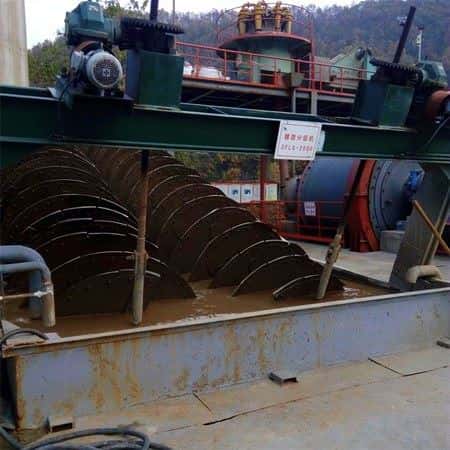
CIL (Carbon In Leach) is an advanced gold extraction method evolved from the CIP process, integrating activated carbon directly into cyanide leaching tanks for simultaneous gold adsorption and leaching—maximizing recovery and efficiency in an eco-friendly, compliant solution.
Capacity: 10–1200 TPD, customizable.
Application: Ideal for low-sulfur, high-mud oxidized gold ores, fine-grained disseminated ores, gravity/amalgamation tailings, arsenic- or carbon-bearing refractory ores, low-grade gold mines, and gold with associated silver and copper.
Introduction of CIL Gold Processing Plant
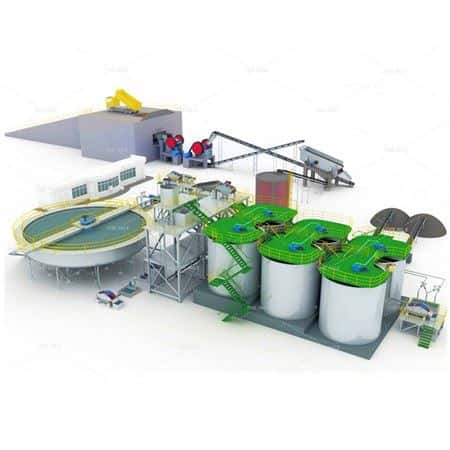
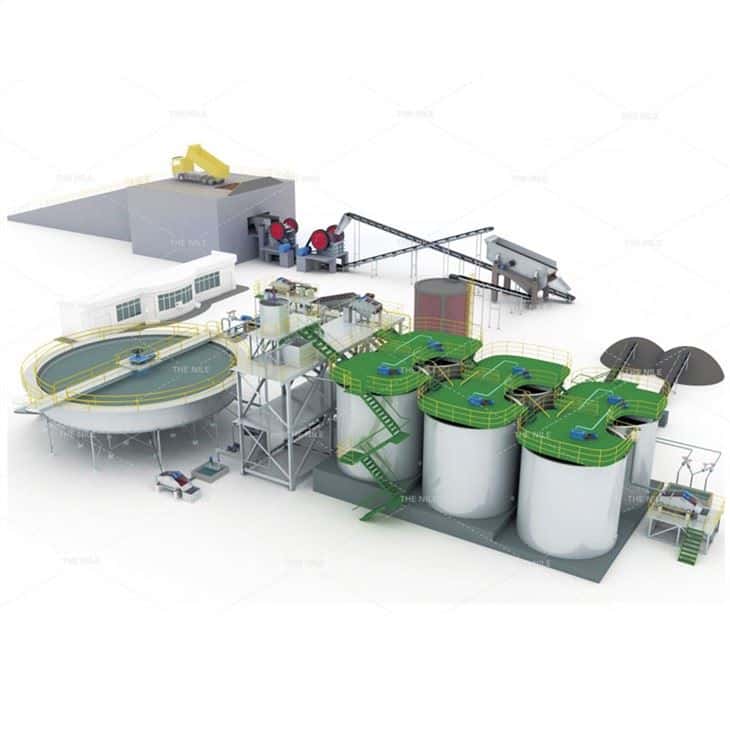
The modern gold CIL (carbon-in-leach) process flow primarily includes crushing, grinding, leaching, desorption, electrolysis, and tailings dewatering. This CIL plant incorporates activated carbon into the ore slurry, allowing for simultaneous leaching and adsorption, simplifying the CIP (Carbon-in-pulp) process. Utilizing high-temperature, high-pressure desorption technology, the gold-loaded carbon completes the entire desorption and electrolysis process within 24 hours, ultimately producing gold ingots with a purity of 99.9%.

Gold Carbon in Leach Process
1. Crushing and Grinding
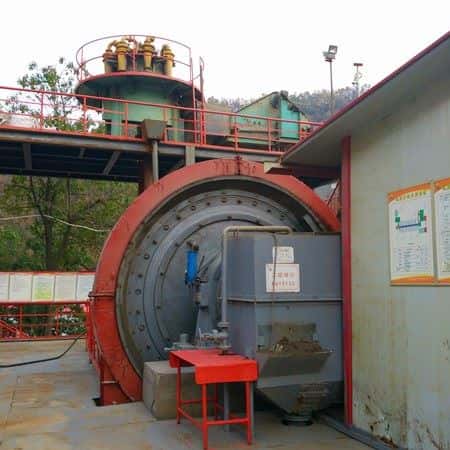
Gold ore undergoes primary crushing using a combination of jaw and cone crushers, followed by fine grinding in a ball mill or semi-autogenous (SAG) mill to a particle size of -200 mesh (with at least 90% passing). This ensures sufficient liberation of gold minerals and enhances leaching efficiency.
2. Slurry Conditioning and Cyanidation Leaching
The ore slurry enters agitation tanks where lime is added to adjust the pH to 10–11, thereby promoting the cyanidation reaction. Sodium cyanide (NaCN) solution is then introduced. Under oxygenated conditions, the gold dissolves to form gold-cyanide complexes.
3. CIL Adsorption Stage (Core Process)
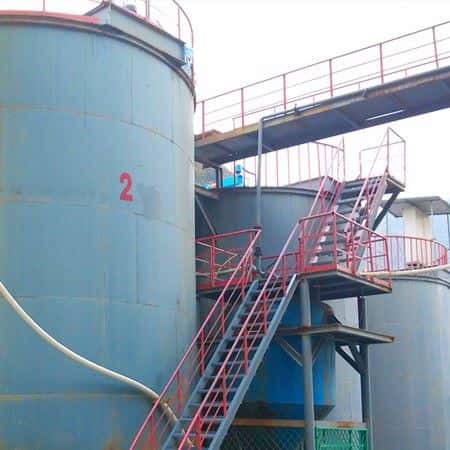
The slurry flows into a series of CIL (Carbon-in-Leach) adsorption tanks (typically 6–12 tanks). Each tank contains coconut-shell activated carbon (particle size 6–16 mesh) that contacts the slurry in a counter-current flow. Under agitation, the activated carbon efficiently adsorbs the gold-cyanide complexes, achieving an adsorption capacity of 300–600 grams of gold per tonne of carbon. The barren solution (depleted slurry) is returned to the leaching tanks for recycling, while the gold-loaded carbon is recovered via vibrating screens.
4. Desorption and Electrowinning of Gold-Loaded Carbon
High-grade gold-loaded carbon enters a high-temperature, high-pressure desorption system, where it is washed with a mixed NaOH-NaCN solution to desorb the gold. The pregnant eluate is heated via a plate heat exchanger and enters the electrowinning cell; gold deposits onto stainless steel cathode plates to form gold sludge (gold content: 40%–50%). The electrowinning barren solution is recycled back to the desorption system. Subsequently, direct current is applied to the cell, causing gold ions to deposit on the cathode (stainless steel plates) and forming gold sludge with a purity exceeding 99.5%.
5. Smelting and Tailings Treatment
After acid washing, the gold sludge is smelted in a medium-frequency furnace at 1,500°C to produce gold ingots (purity >99.9%). The tailings slurry passes through a safety screen to recover fine carbon particles before entering the tailings treatment system. Finally, prior to storage, it undergoes dewatering, discharge of dry solids, or further treatment to ensure compliance with environmental standards.

The process flow of a gold CIL (Carbon-in-Leach) plant primarily comprises: preparation of leach pulp, cyanidation leaching, activated carbon adsorption, desorption of gold-loaded carbon, electrolysis to recover gold sludge, regeneration and recycling of barren carbon, and treatment of leach pulp.
Advantages of CIL Gold Processing Plant
1. Wide Applicability: Suitable for all types of gold ores and tailings.
2. Efficient Crushing: Two-stage jaw crusher + vibrating screen closed-circuit for high efficiency.
3. Premature Free Gold Recovery: Gravity separation recovers liberated gold from the ball mill early.
4. Process Optimization: Two-stage grinding + classification ensures leaching fineness.
5. Maximized Recovery: Gold recovery rate up to 95%.
6. Fast Slurry Circulation: Small circulation keeps solids uniformly suspended.
7. Energy Saving: Power consumption reduced by up to 70%.
8. Compact & Fast: Fewer leaching tanks, shorter cyanidation time, less gold lock-up, faster gold withdrawal.
9. Eco-friendly & Compliant: Meets environmental and regulatory requirements.
Dealing with low-grade, carbon-bearing or arsenic-containing gold ores? Let us design the right CIL/CIP flowsheet for you — contact us for a customized solution and quote!